Home / Topics / Food and nutrition
Food and nutrition · How-to
No-cook emergency meals
Meals that need no fridge, no stove, and no extra water.
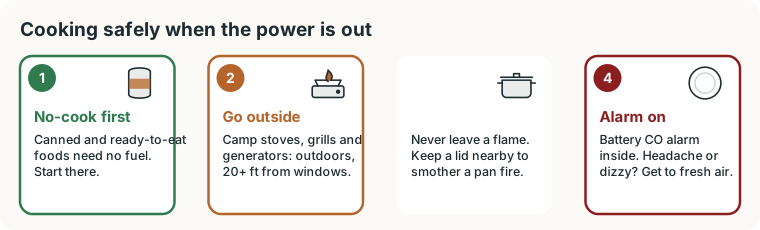
After a disaster the power may be out for days. Ready.gov suggests stocking canned foods, dry mixes, and other staples that don’t need refrigeration, cooking, water, or special preparation.[1]
Good to know
- Commercially canned food can be eaten straight from the can without warming.[1]
- Eat fresh, perishable food first, before you open your stored supply.[2]
- Keep cooking and eating utensils clean, and keep food in covered containers.[1]
No-cook meal ideas from Ready.gov’s list
These combinations use only items on Ready.gov’s suggested supply list[1]. Swap in what your household likes.
| Meal | Idea |
|---|---|
| Breakfast | Dry cereal or granola with shelf-stable pasteurized milk; dried fruit; canned juice |
| Lunch | Peanut butter with crackers or on a protein bar; canned fruit |
| Dinner | Ready-to-eat canned meat or chicken with canned vegetables, eaten cold or warmed |
| Snacks | High-energy bars, dried fruit, nuts, and a comfort food your kids love |
If you want it warm
- Ready.gov lists candle warmers, chafing dishes, fondue pots, and a fireplace as alternative cooking sources. Charcoal grills and camp stoves are for outdoor use only.[1]
- Never use a gas stovetop or oven to heat your home.[3]
Heating food in its can (Ready.gov)
- Remove the label.
- Thoroughly wash and disinfect the can, using a diluted solution of one part bleach to 10 parts water.[1]
- Open the can before heating it.
Babies
Ready.gov says to use ready-to-feed formula. If you must mix formula, use bottled water, or boiled water as a last resort.[1]
Sources
- FEMA / Ready.gov: Food
- American Red Cross: Power Outage Safety
- FEMA / Ready.gov: Power Outages
Official pages checked 14 November 2026. Guidance changes; follow your local officials first. How we research.
Page checked on · Change log · Report an error · Calm by design