Prep in 15 minutes a week
52 short tasks, one a week, following Be Ready Utah’s monthly preparedness topics.[1] Start any week.
Saved only in this browser if you tick “Remember”. We never see it. Want a calendar nudge?
January
- Week 1: Check every smoke alarm
- Week 2: Walk your fire escape plan
- Week 3: Space heater and fireplace check
- Week 4: Warm layers for every person
February
- Week 5: Count your water
- Week 6: Clean and fill one container
- Week 7: Find a good storage spot
- Week 8: Learn two ways to make water safe
March
- Week 9: Three days of food you already eat
- Week 10: Add a manual can opener
- Week 11: Fridge and freezer thermometers
- Week 12: Build up slowly, no debt
- Week 13: Rotate and check cans
April
- Week 14: Check phone emergency alerts
- Week 15: Pick an out-of-area contact
- Week 16: Practise texting, not calling
- Week 17: Weather radio check
May
- Week 18: Check your first-aid supplies
- Week 19: Find a first-aid class
- Week 20: Write the medicine list
- Week 21: Medical alert and health info
June
- Week 22: Make your house number visible
- Week 23: Meet a neighbor
- Week 24: Test CO alarms
- Week 25: Set a family code word
- Week 26: Turn on multi-factor sign-in
July
- Week 27: Plan a no-power meal
- Week 28: Check your outdoor cooking fuel
- Week 29: Fire extinguisher in the kitchen
- Week 30: Home canning: tested recipes only
August
- Week 31: Build the two-bucket toilet
- Week 32: Hand hygiene kit
- Week 33: Toilet paper and personal items
- Week 34: After an earthquake: don’t flush
September
- Week 35: Copy key documents
- Week 36: Small bills at home
- Week 37: Start a home inventory
- Week 38: Read your insurance
- Week 39: Back up your files
October
- Week 40: A flashlight for every person
- Week 41: Know your utility shutoffs
- Week 42: Safe charging habits
- Week 43: Generator safety review
November
- Week 44: Kit check and rotate
- Week 45: Basic tools in one place
- Week 46: Spare glasses and personal items
- Week 47: Pet supplies
December
- Week 48: Car kit for winter
- Week 49: Keep the tank fuller
- Week 50: Plan two routes out
- Week 51: Paper map in the car
- Week 52: Year-end review
Track the bigger picture with your Prep Score.
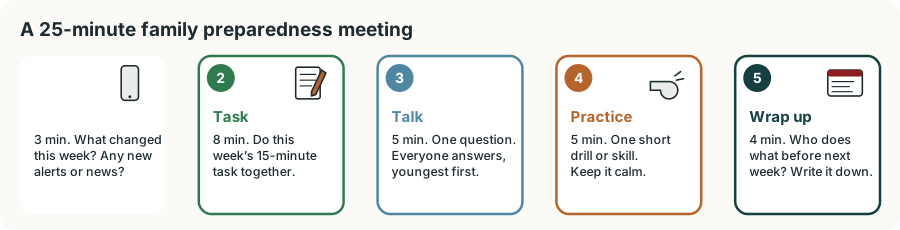
Do this as a family. Each week has a ready-made 25-minute family meeting: this week’s task, one question to talk about, and a 5-minute practice. Every 13 weeks, review your family trigger planner: what signals mean hunker down, deepen the larder, or get out.
Sources
- Utah DEM / Be Ready Utah: Annual Events (monthly preparedness topics)
Official pages checked 16 November 2026. Guidance changes; follow your local officials first. How we research.
Page checked on · Change log · Report an error · Calm by design