Kit guide · Southern Utah hazards
Extreme heat kit for Southern Utah summers
Extreme heat kills more people than any other weather event in the U.S.[2]
How to use this guide: follow the steps, tick off the checklist, then print it . The printout has no shopping links.
Stay-Go Guide · Extreme heat kit for Southern Utah summers · Checked: ____________
What to do
- Find your cool place now. Ready.gov: libraries, shopping malls, or a cooling center through your health department.[1] Plan how you’ll get there.[2]
- Don’t rely on a fan. Ready.gov says fans don’t reduce body temperature or prevent heat illness.[1] The Red Cross says a cool shower or an air-conditioned place is much better.[2]
- Store water. The Red Cross says set aside at least 1 gallon per person per day and consider drinks with electrolytes.[2] Ready.gov says needs can double in very hot temperatures.[3]
- Never leave people or pets in a closed car.[1]
- Check on others, especially older adults and neighbors.[1] If someone may have heat stroke, call 911. Warning signs are on NWS: Heat Illness.
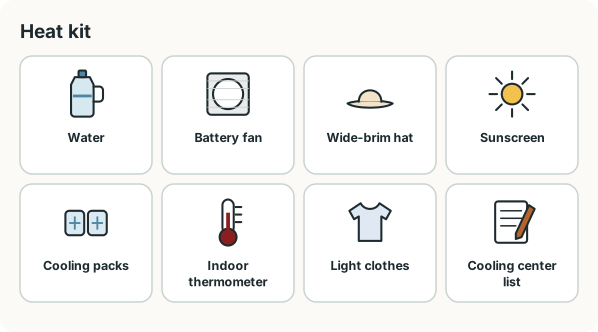
The checklist
Quantities come from the source cited beside them. † marks our packing suggestion where the official list gives no number.
| Item | How many | Why | |
|---|---|---|---|
| Stored water | At least 1 gallon per person per day[2] | More in very hot weather. | |
| Electrolyte drinks or sports drinks | A few days’ worth† | Red Cross: if sweating a lot, combine water with snacks or a sports drink.[2] | |
| Lightweight, loose clothing | Plenty | Red Cross.[2] | |
| Wide-brimmed hat | 1 per person | Ready.gov: a hat wide enough to protect your face.[1] | |
| Window reflectors | For sun-facing windows | Ready.gov: window reflectors designed to reflect heat outside.[1] | |
| Medications and supplies | Red Cross: 1-month supply[2] | Ask your doctor how heat affects your medicines. | |
| Backup batteries and chargers | For phones and medical devices | Red Cross go-kit item.[2] | |
| Water and shade for pets | Plenty | Ready.gov: cool water and shade; hot pavement burns paws.[1] |
Nice to have (not on the official lists)
Optional extras we think are useful. They are our suggestions, not agency recommendations.
| Item | How many | Why | |
|---|---|---|---|
| Battery or USB fan | 1 | For comfort only. It won’t prevent heat illness. | |
| Cooling towels | 2 | For comfort on trails and in the yard. |
Build it on a budget
Ready.gov suggests building a kit over time, starting with what you already have, and checking garage sales and thrift stores.[5] Tiers add up: each one builds on the one before. Dollar amounts are rough planning targets, not price quotes; prices vary.
$0 (Free: gather from home)
- Plan a cool place to go
- Water bottles
- Light clothing
$50
- Battery fan
- Cooling towels
$150
- Power bank for a fan
- Window shades or reflective film
$500
- Power station to run fans during an outage
Shop this list
Affiliate disclosure: the shopping links below are Amazon affiliate links. As an Amazon Associate we earn from qualifying purchases, at no extra cost to you. They are generic search links, not endorsements of a brand. Full disclosure.
These are generic Amazon searches, not picks of a specific brand. Compare ratings, check what fits your household, and buy only what you don’t already own. Most of this list can come from around your home.
Sources
- FEMA / Ready.gov: Extreme Heat
- American Red Cross: Heat Wave Safety
- FEMA / Ready.gov: Water
- NOAA National Weather Service: Heat Illness
- FEMA / Ready.gov: Low and No Cost Preparedness
Official pages checked 14 November 2026. Guidance changes; follow your local officials first. How we research.
Page checked on · Change log · Report an error · Calm by design