Home / Topics / Light and power
Light and power · Checklist
Power outage checklist: before, during, and after
What to do before, during, and after the lights go out.
Before: get ready
- List everything you rely on that uses electricity. Plan batteries or other power for it, such as a portable charger or power bank.[1] Red Cross also suggests non-power alternatives for lighting, communication, medical devices, refrigerated medicine, cooking, garage doors, locks, and elevators.[2]
- Keep a flashlight for every household member.[1] Store batteries in their original packaging, not inside the devices.[3]
- Talk to your medical provider about a power outage plan for powered medical devices and refrigerated medicines.[1]
- Install CO detectors with battery backup on every level of your home[1], and smoke alarms with battery backup on every floor, inside and outside sleeping areas. Test them monthly.[2]
- Keep at least two weeks of non-perishable food and water (Red Cross), plus coolers and a thermometer.[2]
- Have communication that works without home power: a crank or battery radio, chargers, and batteries.[2] Find out whether your home phone works in an outage, and how long its battery backup lasts.[1]
- Have surge protectors on household electronics.[2]
- Keep your car’s gas tank at least half full.[2]
- Add your electric and gas utility phone numbers to your emergency contacts. Learn how to safely shut off your utilities.[3]
- Keep a paper copy of your contact list.[2]
During the outage
- Grab your flashlight first. Use flashlights, not candles.[3][2]
- Check your circuit breakers or fuse box. If nothing is tripped, see whether the neighbors’ lights are on. If they’re out too, report the outage to your power company.[3]
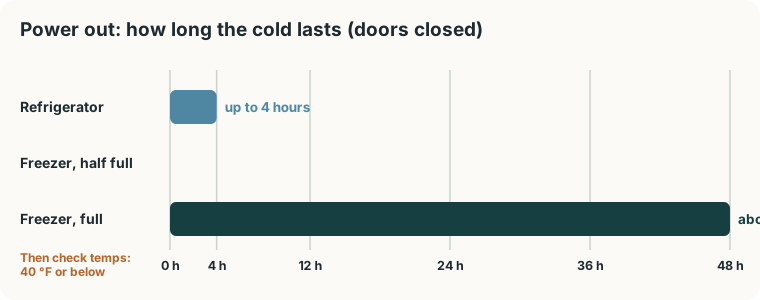
- Keep the fridge and freezer closed. See food safety in an outage.[1]
- Unplug appliances and electronics to avoid damage from surges.[1] Be Ready Utah suggests leaving one light switched on so you know when power returns.[3]
- Never use a gas stove or oven to heat your home.[1] Generators, camp stoves, and charcoal grills go outdoors only, at least 20 feet from windows.[1]
- Save your phone battery. Text instead of calling, and limit use to emergencies.[3]
- If it’s dangerously hot or cold, go to a community location with power. Check with local officials about heating and cooling centers.[1] Red Cross says to evacuate if your home is too hot or too cold, or if you have medical devices that need power.[2]
- Check on your support network: let people know you’re OK, and ask if they need help.[2]
After: power returns
- Stay at least 35 feet from fallen power lines and anything they touch. Call 911.[2]
- Don’t use electrical equipment that may have been underwater. Have a qualified electrical inspector check the system.[2]
- Turn breakers back on one at a time. If lights are dim, flicker, or are excessively bright, turn them off again and call the power company.[3]
- If you turned off the gas, only a qualified professional can turn it back on.[2]
- When in doubt, throw it out: food held at 40°F or higher for two hours or more.[1] If the outage lasted more than a day, discard refrigerated medication unless the label says otherwise, and call your doctor or pharmacist.[1]
Red Cross offers a printable Power Outage Safety Checklist in several languages.
Sources
- FEMA / Ready.gov: Power Outages
- American Red Cross: Power Outage Safety
- Utah DEM / Be Ready Utah: Light & Power (12 Areas)
Official pages checked 14 November 2026. Guidance changes; follow your local officials first. How we research.
Page checked on · Change log · Report an error · Calm by design