Home / Topics / Evacuation
Evacuation · Checklist
Leaving home in an evacuation: the last-out-the-door checklist
The steps to take in the last minutes before you leave.
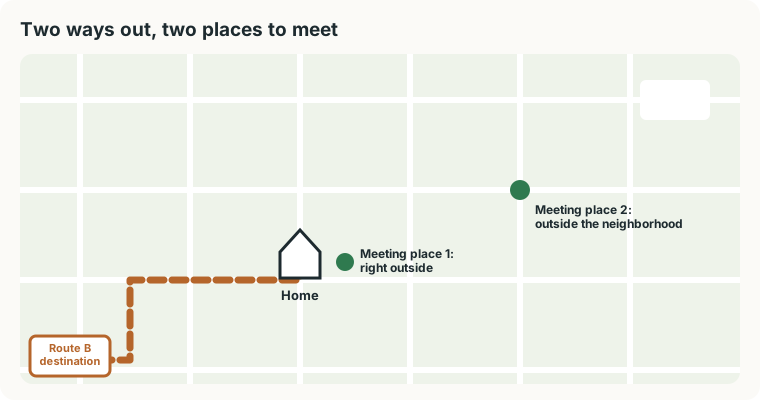
When you have to go, minutes matter. This is the order Ready.gov gives for leaving safely, plus what to grab.
Before you leave (if time allows)
- Grab your go bags, medications, documents, phone chargers, and pets. Wear sturdy shoes and clothing that protects you: long pants, long sleeves, and a hat.[1]
- Call or email your out-of-state contact and tell them where you are going.[1]
- Close and lock doors and windows.[1]
- Unplug radios, TVs, and small appliances. Leave freezers and refrigerators plugged in unless there is a risk of flooding.[1]
- Shut off water, gas, and electricity only if your home is damaged and you are told to.[1] The Red Cross notes that once gas is turned off, only a qualified professional can turn it back on.[2]
- Leave a note saying when you left and where you are going.[1]
On the road
- Follow recommended evacuation routes. Don’t take shortcuts; they may be blocked.[1]
- Watch for washed-out roads or bridges and downed power lines. Don’t drive into flooded areas.[1]
- If a power line falls on your car while you are driving, CDC says stay inside and keep driving away from the line.[3]
- Take one car per family to reduce congestion.[1]
- Listen to a battery-powered radio and follow local instructions.[1]
Not sure whether to go? Use the stay or go tool.
Sources
- FEMA / Ready.gov: Evacuation
- American Red Cross: Power Outage Safety
- CDC: What to Do to Protect Yourself From Electrical Hazards
Official pages checked 14 November 2026. Guidance changes; follow your local officials first. How we research.
Page checked on · Change log · Report an error · Calm by design