Home / Topics / Hazard guides
Hazard guides · Guide
Extreme heat: before, during, and after
Extreme heat kills more people than any other weather event.
On this page: What it is · Before · During · Warning signs
What it is
Ready.gov defines extreme heat as high heat and humidity above 90 degrees for at least two to three days.[1] Older adults, children, and people with chronic conditions are at greater risk.[1]
Before
- Find cooling places such as libraries and malls, or ask your health department.[1]
- Make sure your AC works.[2] Use window reflectors and insulate window units.[1]
- Talk to your doctor if you have a medical condition or take medicines.[2]
During
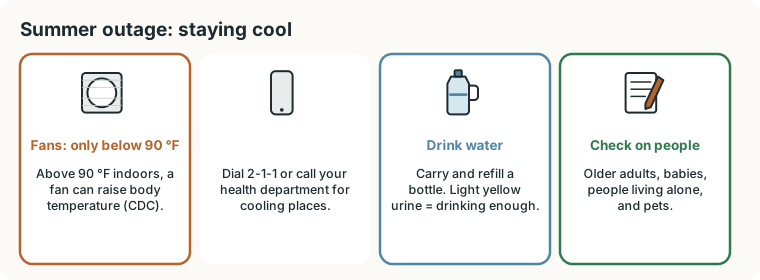
- Don’t rely on a fan; fans don’t lower body temperature.[1] The Red Cross says fans may not prevent heat illness in the high 90s.[2]
- A few hours a day in air conditioning can help prevent heat illness.[2]
- Never leave people or pets in a closed car.[1]
- The Red Cross says an average person needs about 3/4 gallon of water a day; needs vary, and dark yellow urine may mean you need more.[2] For storage, plan on 1 gallon per person per day.[3]
- Avoid midday exertion, find shade, and check on neighbors.[1]
- Give pets cool water and shade; pavement can burn their feet.[1]
Warning signs
Ready.gov lists heat stroke signs including a body temperature above 103°F; call 911 if you suspect heat stroke.[1] Heat exhaustion signs include heavy sweating, paleness, cramps, weakness, dizziness, and nausea.[1]
Treatment steps for injuries and illness are first-aid content that waits for qualified review. In an emergency, call 911.
Official orders come first. If officials tell you to evacuate or shelter, do that. Not sure? Try the stay or go tool.
Related
Heat kit · Desert heat · Scenario: heat wave and outage
Sources
- FEMA / Ready.gov: Extreme Heat
- American Red Cross: Heat Wave Safety
- CDC: How to Create an Emergency Water Supply
Official pages checked 14 November 2026. Guidance changes; follow your local officials first. How we research.
Page checked on · Change log · Report an error · Calm by design