Home / Topics / Hazard guides
Hazard guides · Guide
Thunderstorms and lightning: before, during, and after
Thunderstorms bring wind, hail, flash flooding, and lightning. Most lightning injuries happen because people wait too long to get inside.
On this page: What it is · Before · During · After
What it is
The National Weather Service defines a severe thunderstorm as one that can produce hail an inch or larger or wind gusts over 58 mph.[1] Thunderstorms can also bring tornadoes, lightning, and flash flooding.[1] Lightning strikes the United States about 25 million times a year and kills about 20 people a year. Most lightning happens in summer, but people can be struck at any time of year.[2]
Before
- Know that in most places thunderstorms can happen year-round and at any hour.[3]
- Sign up for your community’s warning system. The Emergency Alert System and NOAA Weather Radio also carry alerts.[3]
- Have a lightning plan: cancel or postpone outdoor plans early if storms are expected, and know where you will go.[4] Identify sturdy buildings near home, work, and school.[3]
- Trim trees that could fall on your home. Consider surge protectors, lightning rods, or a lightning protection system.[3]
During
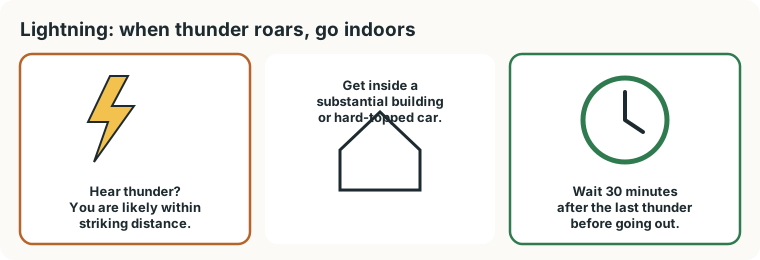
- When thunder roars, go indoors. There is no safe place outside when storms are near, and if you can hear thunder you are likely within striking distance.[4]
- Safe places: substantial buildings and hard-topped vehicles. Not safe: rain shelters, small sheds, and open vehicles.[4]
- Indoors, don’t touch anything plugged into an outlet, plumbing, or corded phones. Cell phones and cordless phones are safe. Stay away from outside doors and windows, and don’t lie on a garage floor.[4]
- Turn around, don’t drown: six inches of fast-moving water can knock you down, and one foot can sweep your vehicle away.[3]
After
- Wait 30 minutes after the last lightning or thunder before going back outside.[4]
- Listen to authorities and forecasts about flash flooding and whether it’s safe to go out.[3]
- Watch for fallen power lines and trees, and report them right away.[3]
- If someone is struck, call 911. Lightning victims do not carry an electrical charge and are safe to touch.[4]
Treatment steps for injuries and illness are first-aid content that waits for qualified review. In an emergency, call 911.
Official orders come first. If officials tell you to evacuate or shelter, do that. Not sure? Try the stay or go tool.
Related
Floods and flash floods · Tornadoes · Alerts and weather radio · Slot canyons
Sources
- NOAA National Weather Service: Severe Thunderstorm Safety
- NOAA National Weather Service: Lightning Safety
- FEMA / Ready.gov: Thunderstorms & Lightning
- NOAA National Weather Service: Overview: Lightning Safety
Official pages checked 14 November 2026. Guidance changes; follow your local officials first. How we research.
Page checked on · Change log · Report an error · Calm by design