Home / Topics / Light and power
Light and power · Guide
Staying cool in a summer power outage
When the AC stops in a heat wave, the plan is simple: get cool air, drink water, and check on each other.
What this covers
Keeping everyone safe when the power or air conditioning fails in hot weather. Heat can cause power outages, so plan for refrigerated medicines and electronic medical devices.[1]
Why it matters
Hot days can affect anyone, and heat can make chronic health conditions worse. People 65 and older and young children may need to take extra steps.[1]
Know the heat alerts
- Extreme Heat Warning: take action. Avoid outdoor activity; stay in air conditioning as much as possible, including overnight; check on family and neighbors.
- Extreme Heat Watch: be prepared. If you don’t have air conditioning, find the nearest cooling shelter or plan to stay with family or friends who have it.
- Heat Advisory: take action. Consider rescheduling outdoor plans, drink plenty of water, and stay somewhere cool.[2]
How to stay cool without power
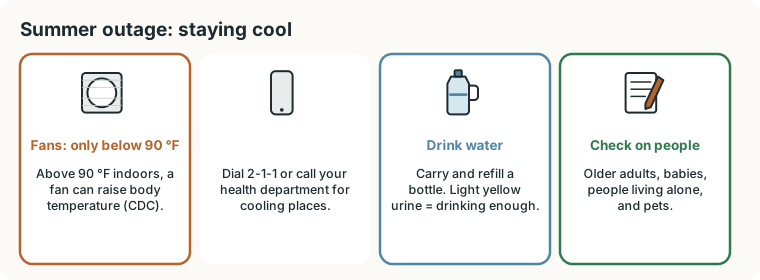
- Use fans only when it’s below 90 °F indoors. Above 90 °F, CDC says a fan can raise body temperature.[1]
- Find air conditioning. Dial 2-1-1, or contact your local health department or emergency management agency for cooling locations.[1] Ready.gov: if heat is extreme, go to a community location with power.[3]
- Drink water through the day. Carry and refill a bottle; limit sugary drinks, caffeine, and alcohol. Light yellow or clear urine usually means you are drinking enough.[1]
- Stay in the shade and do outside tasks in the coolest part of the day.[1]
- Never leave a child, a disabled person, or a pet in a parked car.[4]
- Check on people: family, friends, and neighbors, especially those with chronic medical problems or who live alone, and check on pets.[1]
- Medicines: don’t stop or change them without your doctor; some must be kept out of hot places.[1]
Heat illness signs and first aid are on the National Weather Service heat illness page. If you suspect heat stroke, call 911. Our first-aid content waits for qualified review.
Where
The coolest room in the home during the day, or a cooling center, library, or the home of friends with power. In Southern Utah, read desert heat at home and on the trail.
Related
Extreme heat guide · Heat kit · Extreme heat card · Power-dependent medical equipment
Sources
- CDC: Preventing Heat-Related Illness
- NOAA National Weather Service: Understanding Heat Alerts
- FEMA / Ready.gov: Power Outages
- NOAA National Weather Service: Heat Safety
Official pages checked 14 November 2026. Guidance changes; follow your local officials first. How we research.
Page checked on · Change log · Report an error · Calm by design